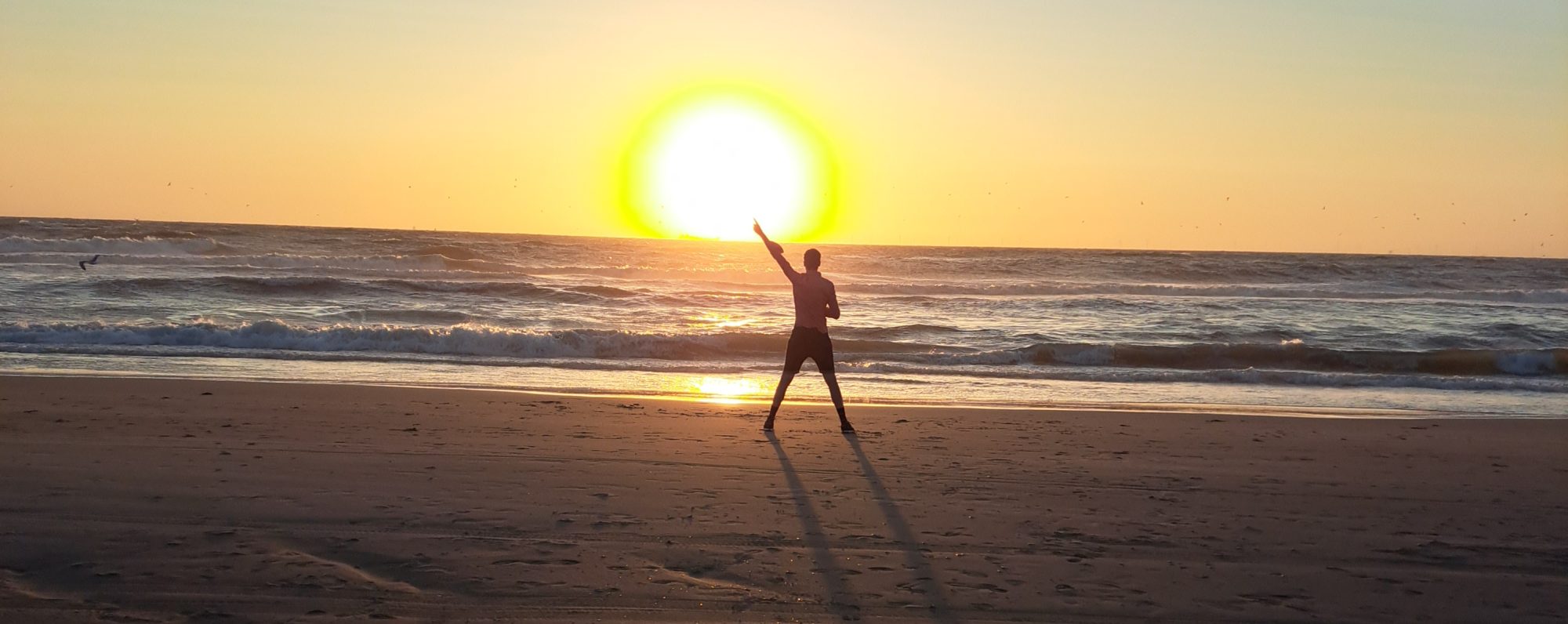
It is 0659 hours on September the second 2020, and my vacation has officially started. My bike and me are currently in the train to Grenoble, and we are both ready for the 140 km bike ride from Grenoble to the beautiful city of Embrun in the French Alps where I aim to refuel my battery in the coming week.
I hear a whistle blowing. The train doors are closing. And off we go. Two hours of train time lie ahead of me, so I take out my laptop from my backpack to think about work for a couple of minutes.
Hmm, I could also close my eyes and try to rest a little, because that did not work out at all last night. I had difficulties catching sleep due to many things going on inside my head, some positive, some negative. You know what, I will just let you in on one of these things, a positive one, which may give you more insighs into my work and which may help me start off the day on a positive note.
For this ‘story’, please let me remind you of why I wanted to go to Geneva. At this city’s University, a very well-known and well-respected scientist in my field has developed several key analytical techniques, some of which I wanted to learn and apply to my research questions. And fortunately, I was able to join his group last year, and I have been learning a lot from this true expert ever since.
One of his key achievements in the past decade is the development of a technique called “SWATH-based metabolomics”. This technique can be used to obtain a kind of profile of all compounds (or at least as many as possible) present in, for example, urine and blood. Thereby, it can be used to learn more about how our bodies function in health and disease, which is something I am particularly interested in.
In recent years, more and more researchers in other countries are starting to apply this technique as well, which is obviously the dream for any researcher. This typically takes some time, or may not happen at all in many cases, but let us say that it is really starting to take off at the moment.
Yesterday, my supervisor dropped by my office to tell me about a recent scientific article written by some renowned researchers who used this technique. He was very pleased by this, but he also mentioned that he felt like these researchers were still on the level of where he was four years ago. Their work could have benefitted from some insights which he gained recently, and he thus mentioned that it could be helpful for others if we would write an article in which we share all our knowledge on this technique.
This may seem the most logical and, frankly, the right thing to do, but this is not how science always work. For example, I can remember hearing from other researchers on many different occasions that they had the feeling that some big shots in their respective fields were purposely hiding trivial details which prevented others from achieving the same quality of results. This is all speculation of course, but keep in mind that scientists are continuously competing with each other to secure research funds which do not come in plenty. Hiding some key details could give you an advantage over the competition, would you not agree?
Anyway, I was inspired by the words and incentive of my supervisor, and I was also blessed that he wanted me to take the lead on such an article. I cannot wait to get started on this, but first I need to attack some mountain climbs in the coming week, which is my own peculiar way of recharging my battery.
 analyzed-by-frank.com